Blog
How to Style a Kurti for Different Occasions

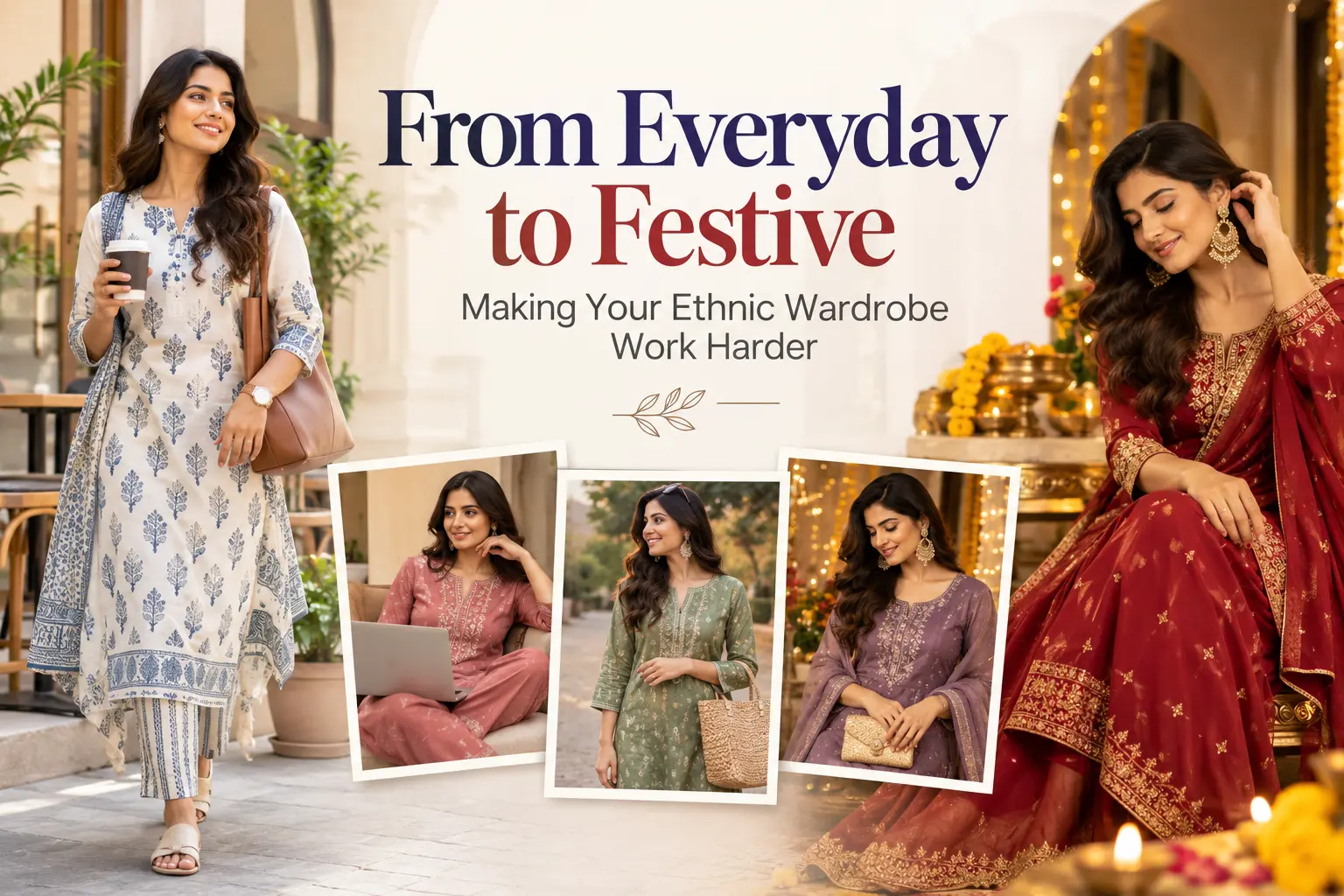
Getting dressed becomes much easier when you know how to make one good piece of clothing work in more than one setting. A woman may have a busy weekday ahead, an unexpected lunch invitation in the afternoon and a family gathering over the weekend. Buying something new for every plan is neither necessary nor sensible. What matters more is knowing how to change the overall look through small choices such as the bottom you pair it with, the footwear, jewellery, dupatta, bag and even the way you carry your hair.
That is where the versatility of women’s ethnic wear becomes particularly useful. Among the many pieces found in an Indian wardrobe, the kurti has remained popular because it can be dressed in several different ways without losing its traditional character. It can look simple enough for everyday life, polished enough for work and dressed up enough for a dinner or family occasion. The secret is not in having dozens of styles. It is in knowing what to do with the one you already have.
Start With the Occasion
Before reaching for jewellery or deciding between sandals and heels, think about where you are going. The same clothing can look completely different depending on how it is styled, which is why styling should begin with the occasion rather than the accessories.
For everyday wear, comfort usually matters most. Work calls for something neat and well put together. A family gathering allows a little more colour and detail. Festivals and celebrations give you room to bring out statement jewellery, dupattas and dressier footwear. There are no rigid rules here. These are simply useful starting points that can help you make better choices without making dressing feel complicated.
Everyday Dressing Should Be Easy
Most of the time, the clothes we wear are not for a grand occasion. They are for getting through the day comfortably while still feeling well dressed. For everyday ethnic dressing, pair your kurti with straight pants, leggings, trousers or comfortable palazzos, depending on the cut and length. Keep the footwear practical and choose accessories that do not require constant attention.
Small earrings, a watch, a simple bracelet or a delicate chain can be enough. A spacious tote or everyday handbag can complete the look without making it feel overdone. The colour of the outfit also matters. Softer shades, simple prints and comfortable fabrics can make an outfit easy to wear repeatedly, while brighter colours and more noticeable prints can add variety when you want something different.
The best everyday styling often looks effortless because there is not too much happening at once.
| When the clothes are comfortable, and the styling feels right, you stop thinking about what you are wearing and simply get on with your day.
Office Wear Needs a Different Balance
Ethnic wear can work very well in professional settings, provided the styling remains appropriate for the workplace. Straight-cut kurtis, subtle prints and solid colours are particularly easy to work with. Pair them with tailored trousers or straight pants and keep the accessories relatively simple.
A structured handbag can make the outfit look more professional. Closed shoes, loafers, flats or modest heels can work depending on your workplace and personal preference. You can also use colour to change the mood of the outfit. A deep blue, earthy green, beige, maroon or muted pastel can create a more restrained appearance, while a brighter shade can still work if the rest of the styling is kept simple.
There is no need to remove all personality from workwear. Professional dressing does not mean looking exactly like everyone else.
When You Want a More Contemporary Look
Not every ethnic outfit needs to be styled in a completely traditional way. This is where modern Indian dressing becomes interesting. Try pairing a longer kurti with wide-leg trousers or straight pants. Depending on the silhouette, you can also experiment with minimal jewellery and contemporary footwear. A structured handbag instead of a traditional potli can change the entire appearance.
For a more relaxed look, sneakers can work with certain contemporary kurtis, particularly when the outfit has a clean silhouette and minimal detailing. The important thing is proportion. If the kurti is loose and flowing, a more streamlined bottom can help balance the outfit. If the top is relatively straight and simple, a wider trouser can add some interest.
Styling works best when the individual pieces make sense together rather than when every current trend is added to the same outfit.
Family Lunches and Casual Gatherings
There are plenty of occasions where you want to make an effort without looking as though you are dressed for a wedding. Family lunches, casual get-togethers, visits to relatives and weekend outings fall into this category.
This is where printed kurtis, lightly detailed pieces and coordinated separates can work particularly well. Add a dupatta if you want the outfit to feel more traditional. Leave it out when you prefer something simpler. Choose jhumkas or slightly larger earrings if you want more presence, or keep the jewellery minimal if the outfit already has an attractive print.
Footwear can make another noticeable difference. Kolhapuris, juttis, flats and simple sandals can keep the look relaxed, while dressier footwear can make the same clothing suitable for an evening plan. You do not necessarily need another outfit. Sometimes you just need another way of wearing it.
Festive Styling Calls for More Detail
Festivals are a good opportunity to bring more of your ethnic wardrobe into the picture. This is the time for brighter colours, richer fabrics, traditional jewellery, dupattas and more noticeable detailing.
If your kurti has a relatively simple design, you can let the accessories carry more of the festive character. Statement earrings, bangles, a detailed dupatta and traditional footwear can change the appearance considerably. On the other hand, if the outfit itself has embroidery or a strong print, there is no need to add too much around it.
This is an important part of styling that is often overlooked. More does not always mean better. A beautifully detailed outfit can look far better when you allow it some space rather than competing with it through excessive jewellery.
Give the Dupatta Some Attention
The dupatta is not simply an extra piece that comes with a suit. It can completely change the way an outfit looks. A printed dupatta can add colour to a plain outfit. A contrasting one can create a stronger visual combination. A lighter dupatta can keep the outfit relaxed, while an embellished one can make it more suitable for a celebration.
You can also change how you wear it. Drape it over one shoulder for a relaxed appearance or carry it across both shoulders for a more traditional look. Let it fall naturally rather than constantly adjusting it if you want something casual. The choice depends on the outfit, the occasion and what feels comfortable.
This is particularly useful when working with traditional Indian clothing because one additional piece can give an otherwise familiar outfit a different appearance.
Jewellery Can Change the Whole Outfit
Jewellery is one of the simplest ways to move an outfit from ordinary to occasion-ready. For daytime dressing, small hoops, studs, a delicate chain or a watch may be enough. For an evening gathering, you can bring in statement earrings, bangles or a necklace. Festive occasions allow even more freedom with traditional jewellery.
But there is one useful rule: look at the clothing before choosing the jewellery. If the neckline has embroidery or detailing, a large necklace may not be necessary. If the outfit is simple around the neck, a statement necklace can add interest.
The same applies to earrings. A pair of large jhumkas can become the main feature of an otherwise simple outfit. When wearing them, you may not need much else.
Footwear Is More Important Than It Looks
Shoes can quietly change the entire character of an outfit. Flat sandals keep things relaxed. Juttis can bring in a distinctly traditional touch. Heels can make the outfit feel more formal. Loafers can give certain contemporary looks a sharper appearance.
Comfort should still have a say. If you are attending an event where you will be standing and walking for several hours, the most beautiful pair of shoes will not help if you cannot comfortably wear them.
Think about the occasion before making the final choice. Daytime family functions, office hours and casual outings may call for something practical, while evening dinners and celebrations give you more room for dressier footwear.
Choose the Right Bottom
The bottom you choose can change the proportions of the entire outfit. Straight pants usually create a clean, balanced appearance. Palazzos bring more movement and work particularly well with certain shorter or straight silhouettes. Leggings can create a simple, fitted look with longer kurtis.
Wide-leg trousers can give a contemporary feel, especially when paired with a longer or more structured top. There is no single combination that works with every kurti. Pay attention to the length, shape and fabric of the top. A loose, flowing piece may work better with a more controlled bottom, while a relatively straight silhouette can give you more freedom to experiment.
From Day to Evening Without Changing Everything
One of the most useful styling tricks is knowing how to take an outfit from one part of the day into another.
Imagine you are wearing a simple kurti for work. During the day, keep the accessories minimal, use comfortable footwear and carry a practical handbag. If you have plans later, change into dressier footwear, add statement earrings and replace the work bag with a smaller handbag.
If the outfit works with a dupatta, adding one can make it feel more suitable for an evening gathering. The clothing remains the same. The styling changes with the occasion.
This is exactly why versatile ethnic wear for women can be such a useful part of a wardrobe.
Styling Pakistani-Inspired Kurtis and Suits
Pakistani-inspired clothing has become particularly popular among women looking for detailed prints, attractive colour combinations and distinctive designs. These pieces can work for festive occasions, family gatherings and evening events, depending on their design.
If the outfit already has substantial detailing, keep the accessories measured. If the print is the main attraction, choose jewellery that complements rather than competes with it. For a more relaxed appearance, simple footwear can tone down a dressier piece. For a celebration, traditional earrings and a suitable dupatta can bring the outfit together.
The idea is to let the clothing retain its character while adding your own touch.
A Few Things Worth Avoiding
Good styling is sometimes about knowing what to leave out. Avoid wearing too many competing prints together unless you are deliberately creating a layered look. Be careful when mixing several statement accessories. If your outfit has heavy detailing, there is rarely a need to add equally heavy jewellery, a loud bag and elaborate footwear all at once.
You should also avoid choosing accessories only because they are fashionable. Something can be popular and still not work with your outfit.
Look at the complete appearance before deciding. Stand in front of a mirror and ask yourself whether everything belongs together. If one item is demanding all the attention, removing it may actually improve the outfit.
Make Your Existing Wardrobe More Useful
Styling is not about constantly adding more clothes. In fact, learning to style what you already own can help you understand what you genuinely need.
Perhaps you have several kurtis but very few good bottoms. Maybe your outfits are fine, but you lack versatile footwear. Perhaps you have plenty of everyday clothing but very little for festive occasions.
Once you see these gaps, shopping becomes much easier. Instead of buying whatever looks attractive at the moment, you can choose pieces that fill an actual need. That is how a wardrobe becomes more useful over time.
Choosing the Right Kurti Online
When shopping for kurtis online, photographs will naturally be the first thing that attracts your attention. But they should not be the last thing you look at.
Read the product description carefully. Check the fabric, measurements, length and available sizes. Pay attention to the neckline, sleeves, detailing and whether the product is sold individually or as part of a set.
If you are buying online, these details matter because you cannot physically touch the fabric or try the garment before placing the order. Clear product information can make the decision much easier.
It also helps to think about where you are likely to wear the piece before buying it. An outfit that looks beautiful but has no place in your existing wardrobe may not be as useful as one that works with several things you already own.
The Way We Look at Kurtis at Zunaira
At Zunaira, kurtis form part of a wider collection of women’s ethnic and traditional wear that also includes unstitched suits, ready-made suits, semi-stitched suits, Pakistani replica suits and co-ord sets.
The idea behind the collection is not simply to offer a large number of products. Zunaira’s stated focus is on carefully curated ethnic fashion and on selecting designs that the family would confidently recommend to their own family, friends and customers.
That thinking also applies to how clothing should be worn. A piece should have a place in real life. It should work with the way women dress, the occasions they attend and the comfort they expect from their clothes.
Customer feedback received by Zunaira has highlighted elegant designs, attractive colour combinations, quality and the premium appearance of the collections, along with the brand’s willingness to help customers choose outfits according to their preferences and occasions.
There Is No Single Right Way to Wear It
Fashion advice often makes dressing sound more complicated than it needs to be. You do not need to follow every styling rule. You do not need to own every accessory. You certainly do not need to buy something new every time you have somewhere to go.
Start with the clothing you like. Then consider the occasion. After that, look at the footwear, jewellery, bottom, bag and dupatta and decide what the outfit actually needs.
Sometimes it will need very little. That is perfectly fine.
The best styling is not necessarily the one that gets the most attention. It is the one where every part of the outfit feels like it belongs there.
And that is what makes the humble kurti so useful. It can be simple when your day calls for simplicity, polished when you need to look professional, contemporary when you want something different and festive when the occasion deserves more.
| One piece of clothing can have many lives. The way you style it decides which one you see today.